-
![]()
Daisy
Daisy is the Senior editor of the writing team for EaseUS. She has been working in EaseUS for over ten years, starting from a technical writer to a team leader of the content group. As a professional author for over 10 years, she writes a lot to help people overcome their tech troubles.…Read full bio -
Jane is an experienced editor for EaseUS focused on tech blog writing. Familiar with all kinds of video editing and screen recording software on the market, she specializes in composing posts about recording and editing videos. All the topics she chooses …Read full bio
-
![]()
Alin
Alin is an experienced technical blog writing editor. She knows the information about screen recording software on the market, and is also familiar with data cloning and data backup software. She is expert in writing posts about these products, aiming at providing users with effective solutions.…Read full bio -
Jean is recognized as one of the most professional writers in EaseUS. She has kept improving her writing skills over the past 10 years and helped millions of her readers solve their tech problems on PC, Mac, and iOS devices.…Read full bio
-
![]()
Jerry
Jerry is a fan of science and technology, aiming to make readers' tech life easy and enjoyable. He loves exploring new technologies and writing technical how-to tips. All the topics he chooses aim to offer users more instructive information.…Read full bio -
![]()
Rel
Rel has always maintained a strong curiosity about the computer field and is committed to the research of the most efficient and practical computer problem solutions.…Read full bio -
![]()
Gemma
Gemma is member of EaseUS team and has been committed to creating valuable content in fields about file recovery, partition management, and data backup etc. for many years. She loves to help users solve various types of computer related issues.…Read full bio
Page Table of Contents

Jane Zhou
Updated on Oct 22, 2026
0 Views |
0 min read
If you want to do screen recording tasks smoothly without affecting the performance of your computer, the lightweight screen recorder should be your first option. It is just an application that is small and will consume minimal system resources during recording. Similar to the standard screen recorders, it also offers the necessary and advanced recording features. Now, let's look at the best lightweight screen recording software on this page!
How We Tested Lightweight Screen Recorders
To make this list more practical, I didn't just compare features; I focused on real performance.
| 💻Test setup |
|
| 📚What I measured |
|
| 🎉Recommend option |
|
What Makes a Screen Recorder Lightweight
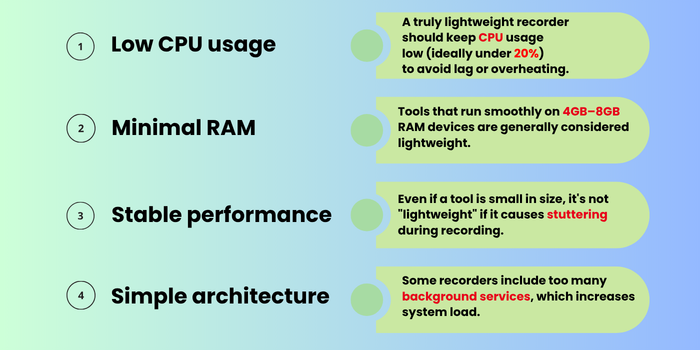
A "lightweight" screen recorder isn't just about having a small installation size; it's more about how efficiently it uses your system resources during recording.
From testing, the most important factors are:
1. Low CPU usage
2. Minimal RAM consumption
3. Stable performance (no lag or frame drops)
4. Simple architecture (no heavy background processes)
Share these lightweight screen recorders with more users!

Top 5 Lightweight Screen Recorder Solutions
Here are the lightweight screen recorders that performed best in real-world use.
|
Tool |
Compatibility |
Best for |
CPU |
Notes |
|
EaseUS RecExperts |
Windows, Mac |
Beginners & stable recording |
6-12% |
Smooth, real-time annotation, multiple modes, no watermark |
|
OBS Studio |
Windows, Mac, Linux |
Free, advanced users |
20-30% |
High-quality, customizable, but not beginner-friendly |
|
Fraps |
Windows |
Old games & low-end PCs |
5–15% |
Simple, low resource usage, large file sizes |
|
ScreenRec |
Windows, Mac, Linux |
Instant recording & sharing |
8–15% |
Quick start, cloud sharing, low resource usage |
|
ScreenMix |
Windows |
Ultra-low CPU usage |
5–10% |
Minimal system impact, beginner-friendly, Windows only |
#1. EaseUS RecExperts
- Performance in testing:
-
CPU usage: ~6–12%
No visible lag during recording
Smooth export process
The first one is EaseUS RecExperts, a multi-platform lightweight screen recording software. Whether you use a Windows 7, 8, 10, or a macOS computer, you can always choose this tool to capture the screen.
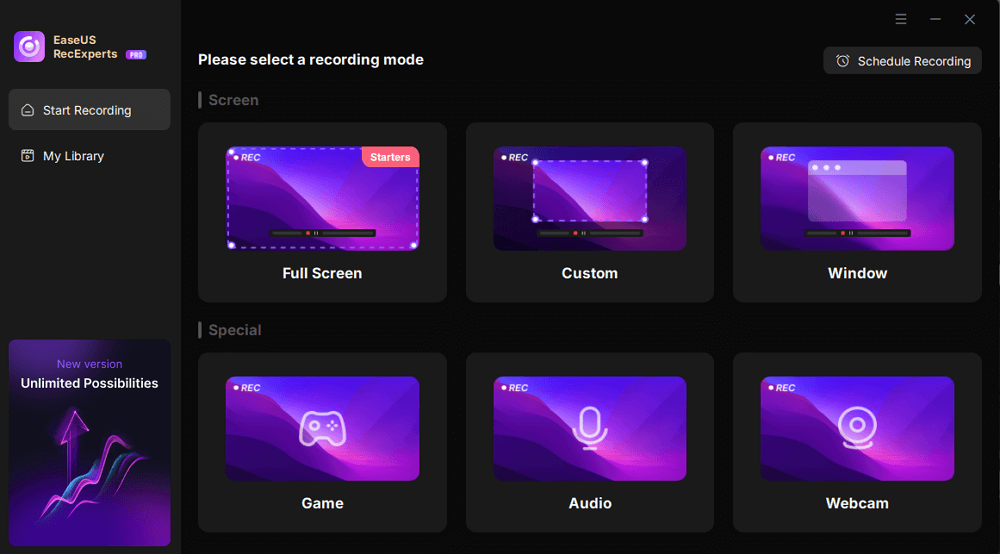
This screen recorder without watermark offers different useful recording modes, aiming to help users deal with various screen recording tasks. For example, you are able to create an entire, partial, or multiple screen recording flexibly. Also, you can even use annotation tools to add text or shapes on the screen in real time during your recording. There is a professional game recording mode available, with which you can record gameplay footage without affecting your computer performance! Just hit the below button to get it now!
Pros:
- Straightforward to use
- Many useful recording modes are available
- No time limit or watermark for any recording
- Provide essential editing tools to enhance your recorded files
Cons:
- A few advanced options are available in the Pro version
Share these lightweight screen recorders with more users!
#2. OBS Studio
- Performance in testing:
-
CPU usage: ~20–30% (default settings)
Can cause lag on low-end PCs if not configured properly
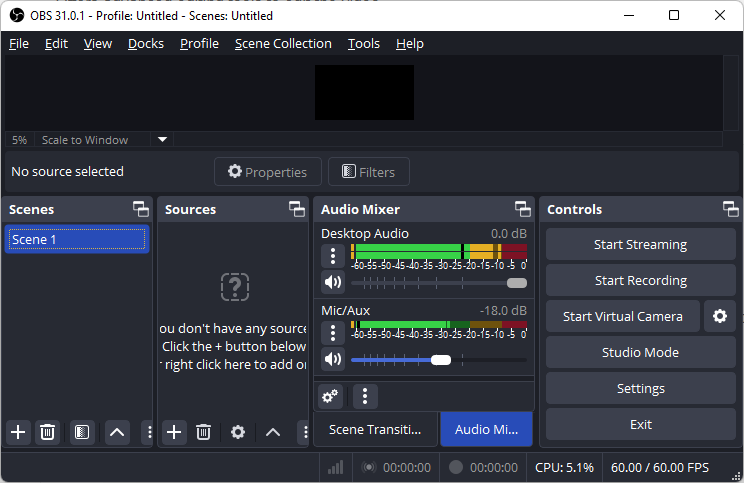
OBS Studio is a powerful open source screen recorder, but calling it "lightweight" depends on how you use it. In testing, OBS consumed more CPU than other tools when using default settings, but it can be optimized. The biggest drawback is the learning curve — it's not something you can pick up instantly.
Pros:
- Completely free and open-source
- Export high-quality recordings
- Recording and streaming features are available at the same time
Cons:
- Not friendly for beginners
- Crashes sometimes
Free Download: OBS Studio official website
#3. Fraps
- Performance in testing:
-
CPU usage: ~5–15%
RAM usage: ~500–700MB
Generally smooth during recording, but may cause FPS drops in games
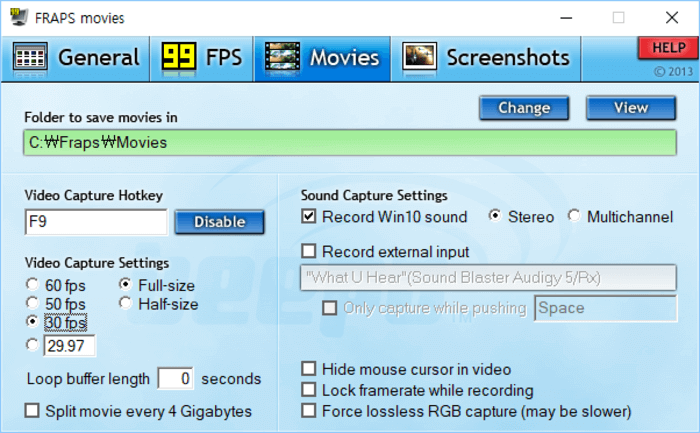
This is a professional lightweight screen recorder for PC Windows 7, 8, and 10. Whether creating video tutorials, capturing streaming videos, or taking screenshots, you can always use this Windows screen recorder for all these tasks.
While recording, this screen capture software will show how many frames per second you are getting in the corner of your screen, perform benchmarks, and measure the frame rate between any two points.
Pros:
- Extremely easy to use
- Custom frame rate capabilities
- Support changing recording parameters, like resolution, etc.
Cons:
- The UI is a little outdated
- Only available for Windows
Free Download: FRAPS official website
#4. ScreenRec
- Performance in testing:
-
CPU usage: ~8–15%
RAM usage: ~400–600MB
Smooth recording with minimal lag in standard use
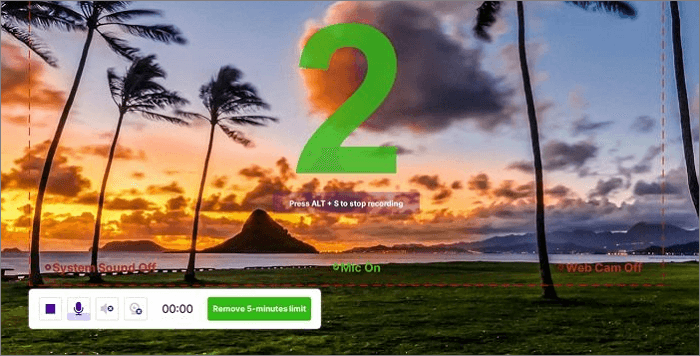
ScreenRec is another lightweight PC, Mac, and Linux screen recording software. With its aid, you can capture your desktop screen in one click and share instantly.
Like other tools mentioned above, this software offers a wide range of recording features, like webcam recording, audio recording, gameplay recording, and many more. Apart from that, it even allows you to save and share your recorded files in the cloud with one simple click.
Pros:
- Support flawless 1080P screen recording at any frame rate
- Automatically save your recording in your private cloud storage
- Allow recording screen with webcam and audio
Cons:
- Limited recording tools in the free version
Free Download: ScreenRec official website
#5. ScreenMix Light
- Performance in testing:
-
CPU usage: ~5–10%
RAM usage: ~300–500MB
Very stable with almost no lag during basic recording
The last lightweight screen recorder is ScreenMix Light, a lightweight free version of Mixilab's "ScreenMix - Screen Recorder".
This software also has a delayed recording function. Delayed recording allows you to operate more leisurely. The quality and size of the output video from this product can be controlled by you. Moreover, its CPU and memory usage is also very low, which avoids overloading the computer memory or storage due to screen recording.

Pros:
- Simple and easy to use
- Support recording videos of multiple displays and mouse pointers
- Support hotkeys recording
- A free video editor is available
Cons:
- Not compatible with macOS and Linux
Free Download: ScreenMix Light official website
How to Choose the Right Lightweight Screen Recorder
The best lightweight screen recorder isn't just small — it should run smoothly on your specific setup. Choosing the right tool depends on your needs:
- For low-end PCs: choose a recorder with low CPU usage (under 20%)
- For beginners: look for simple UI and quick setup
- For free use: OBS Studio or ScreenRec are good options
- For stability: choose tools with consistent performance and minimal lag
Tips to Reduce Lag When Screen Recording
Even with a lightweight screen recorder, your recording performance also depends on how you set up your system.
Here are some practical tips to reduce lag and CPU usage while recording:
1. Close unnecessary background apps
Apps like browsers, Chrome tabs, or music players can consume CPU and RAM. Closing them can significantly improve recording performance.
2. Lower your recording resolution
Recording in 1080p or 4K requires more resources. If you're on a low-end PC, switching to 720p can reduce CPU usage noticeably.
3. Reduce frame rate (FPS)
30 FPS is usually enough for tutorials or basic recording. Higher FPS (like 60) will increase CPU load.
4. Disable unnecessary overlays
Webcam overlays, animations, or effects can increase system usage. Turn them off if you experience lag.
5. Use hardware acceleration (if available)
Some screen recorders support GPU acceleration, which can reduce CPU usage and improve performance.
Final Words
This post shows you five lightweight screen recording software that can work perfectly on Windows, macOS, and even Linux computers, and which one is your choice?
If you still have difficulty deciding, we highly recommend EaseUS RecExperts. This tool is straightforward to use, and offers lots of recording tools as well as editing tools. It's worth trying!
Lightweight Screen Recorder FAQs
1. Which screen recorder uses the least RAM?
Actually, there are many screen recorders that use less RAM during recording, like OBS Studio, ScreenRec, ScreeMix Light, and more. But if you want to find the one that uses the least RAM, EaseUS RecExperts should be your best choice. It runs perfectly on almost all low-end PCs, and consumes minimal system resources.
2. How do I record my screen with low size?
Below are some tips you can refer to for recording screens with low sizes:
- Select a lower video resolution before starting the recording
- Choose a lower frame rate
- Compress your recordings after it is completed. Most screen recorders on the market don't offer the compressing option. If you have difficulty finding one, try the EaseUS screen recorder.
3. Which screen recorder has no watermark or lag?
Here are some recommendations:
- OBS Studio
- Xbox Game Bar
- QuickTime Player
- Loom
- CamStudio