-
![]()
Daisy
Daisy is the Senior editor of the writing team for EaseUS. She has been working in EaseUS for over ten years, starting from a technical writer to a team leader of the content group. As a professional author for over 10 years, she writes a lot to help people overcome their tech troubles.…Read full bio -
Jane is an experienced editor for EaseUS focused on tech blog writing. Familiar with all kinds of video editing and screen recording software on the market, she specializes in composing posts about recording and editing videos. All the topics she chooses …Read full bio
-
![]()
Alin
Alin is an experienced technical blog writing editor. She knows the information about screen recording software on the market, and is also familiar with data cloning and data backup software. She is expert in writing posts about these products, aiming at providing users with effective solutions.…Read full bio -
Jean is recognized as one of the most professional writers in EaseUS. She has kept improving her writing skills over the past 10 years and helped millions of her readers solve their tech problems on PC, Mac, and iOS devices.…Read full bio
-
![]()
Jerry
Jerry is a fan of science and technology, aiming to make readers' tech life easy and enjoyable. He loves exploring new technologies and writing technical how-to tips. All the topics he chooses aim to offer users more instructive information.…Read full bio -
![]()
Rel
Rel has always maintained a strong curiosity about the computer field and is committed to the research of the most efficient and practical computer problem solutions.…Read full bio -
![]()
Gemma
Gemma is member of EaseUS team and has been committed to creating valuable content in fields about file recovery, partition management, and data backup etc. for many years. She loves to help users solve various types of computer related issues.…Read full bio
Page Table of Contents

Alin
Updated on Sep 22, 2026
0 Views |
0 min read
Can someone record a Microsoft Teams meeting without you knowing? With Teams' built-in recording feature, participants are notified when a meeting recording starts. However, organizations can also configure automatic recording and recording policies, so it is important to understand the difference between being notified, giving consent, and being recorded.
This guide explains how Teams recording works, whether an organization can record employee meetings, and what to know about consent and recording laws.
Can You Record a Teams Call Without Others Knowing?
Not normally with Teams' built-in recording feature. When a Teams meeting recording starts, Microsoft says that all participants receive a notification in the Teams desktop, web, or mobile app.
However, this does not mean every recording requires participants to click an Agree button.
Teams currently supports several recording models:
|
Scenario |
Will Teams Notify Participants? |
|
Someone starts a Teams recording |
Yes |
|
A meeting is set to record automatically |
Yes |
|
Transcription starts |
Yes |
|
Explicit Recording Consent is enabled |
Yes — eligible participants must actively consent |
|
A participant declines consent |
They cannot participate with audio, video, or content sharing |
|
Teams Premium restricts recording permissions |
Yes — admins can control who can record |
|
Compliance recording is used |
Yes, under Microsoft's compliance recording model |
|
A third-party recorder is used |
Not necessarily — Teams' notification system does not cover external recording tools |
|
Someone records with another device |
No Teams notification — the recording occurs outside Teams |
Microsoft distinguishes between regular convenience recording and compliance recording. Compliance recording can be configured to record calls or meetings automatically without a user manually starting the recording. Microsoft also states that participant notification is enforced for both recording types.
So, "automatically recorded" does not necessarily mean "secretly recorded."
Share this guide on your social media platforms to help more people.

Can an Organization Record Employees' Meetings Without Consent?
This depends on the organization's Teams policies and the laws that apply to the people being recorded.
From a Teams functionality perspective, an organization can configure meetings to record automatically and can also use compliance recording for certain business or regulatory requirements.
However, Teams' technical ability to record a meeting is different from whether an organization is legally allowed to do so without consent.
Recording laws vary by country, state, and situation. Some jurisdictions may require consent from one participant, while others may require consent from all parties. Workplace privacy rules, employment policies, industry regulations, and cross-border meetings can also affect the requirements.
For this reason, no universal answer as to whether an employer can or cannot record every employee meeting without consent.
If you are concerned about a specific workplace recording, check your organization's recording/privacy policy and the laws that apply in your jurisdiction. For legal advice, consult a qualified legal professional.
Does Teams Require Your Consent Before Recording You?
Not by default in every organization.
Microsoft Teams has an Explicit Recording Consent policy that administrators can enable for their organization. The setting is currently Off by default. When enabled, participants must provide consent before they can be included in recording and transcription.
When explicit consent is required:
Participants are initially muted, and their cameras and content sharing are turned off.
When they try to unmute, turn on their camera, or share content, Teams asks whether they consent to being recorded or transcribed.
If they choose No, they remain in a view-only experience, and their audio, video, and shared content are not included in the recording.
This is an important distinction:
Notification tells you that recording is happening. Explicit consent asks you to actively agree to being included.
Teams does not automatically require this active consent in every organization. It depends on the recording consent policy configured by the administrator.
How to Record a Teams Call with Built-in Feature
Best for: Record Teams calls without installing other software
Microsoft Teams offers built-in screen recording capability to record, transcribe, and view captions during a Teams call. It provides a powerful and accessible way to capture and review calls. With capabilities like automatic transcription, live captions, and easy storage and sharing, it makes call recording or recording yourself on Teams efficient and straightforward.
Step 1. Enable Teams call recording feature first. Microsoft Teams turns off the calling recording function by default. You can enable it in Microsoft Teams admin center or PowerShell. Users and administrators can flexibly select and set Convenience or Compliance recording modes according to their needs.
Step 2. Join the Microsoft Teams call and click on the "More" button.
Step 3. Select "Start Recording" from the drop-down menu, and a notification will appear at the top of the screen to inform all participants that the call is being recorded.
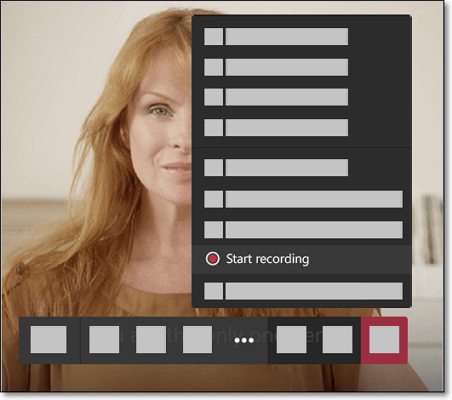
Step 4. Click the "More" option again to "Stop Recording". The recorded file will be automatically saved to OneDrive or SharePoint. You can also use the built-in sharing capabilities of Microsoft Teams to share recordings with team members or external collaborators securely.
Record Teams Call with Powerful Audio and Video Call Recorder
- OS: Compatible with both Windows and Mac
- Best for: Record audio and video calls or other content easily
Some users may require additional functionality to enhance recording. Opting for third-party audio call recording software is a wise decision, as it offers a range of more advanced features and enhanced functionality. EaseUS RecExperts is one of the best call recorders for you. It offers high-definition audio and video recording with noise cancellation.
It also provides webcam overlay and real-time annotation functions. With it, users can easily record Teams meeting in laptop with audio. Besides capturing video and audio calls, it can record screen, webcam, as well as other streaming content, without any hassle. Please remember that no matter what form of content you record, it is necessary to obtain permission to avoid the risks of non-compliant operations.
Key features:
- Simple to use, even for beginners.
- Record calls in various formats like MP4, MOV, MKV, MP3, OGG, etc.
- Capture audio resources without background noise.
- Its schedule recording feature helps to capture calls automatically.
Steps on how to record calls with this fantastic screen and audio recorder:
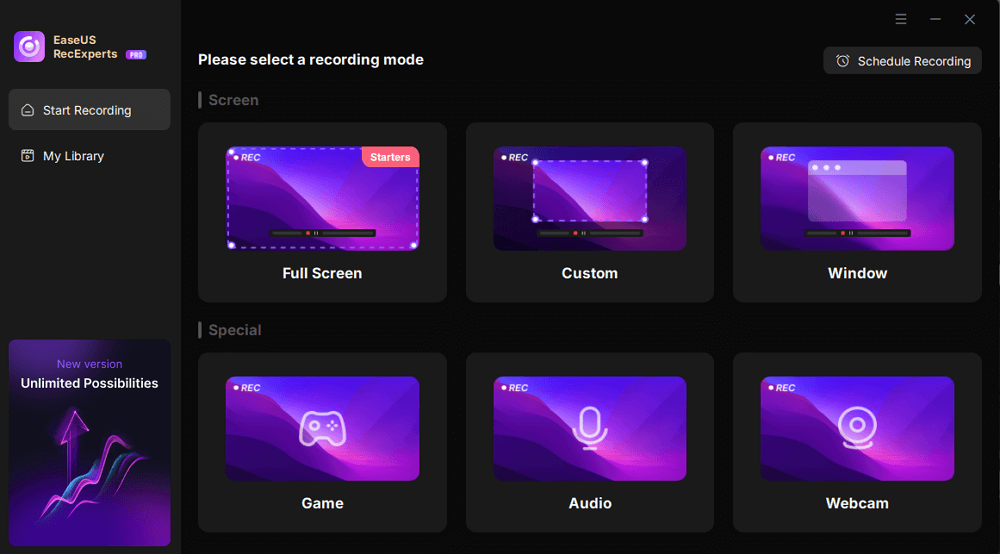
1Step 1. Launch the EaseUS RecExperts and make sure your microphone and speaker/headset are connected. Then, click the Audio icon on the main screen to enter audio-only recording mode.
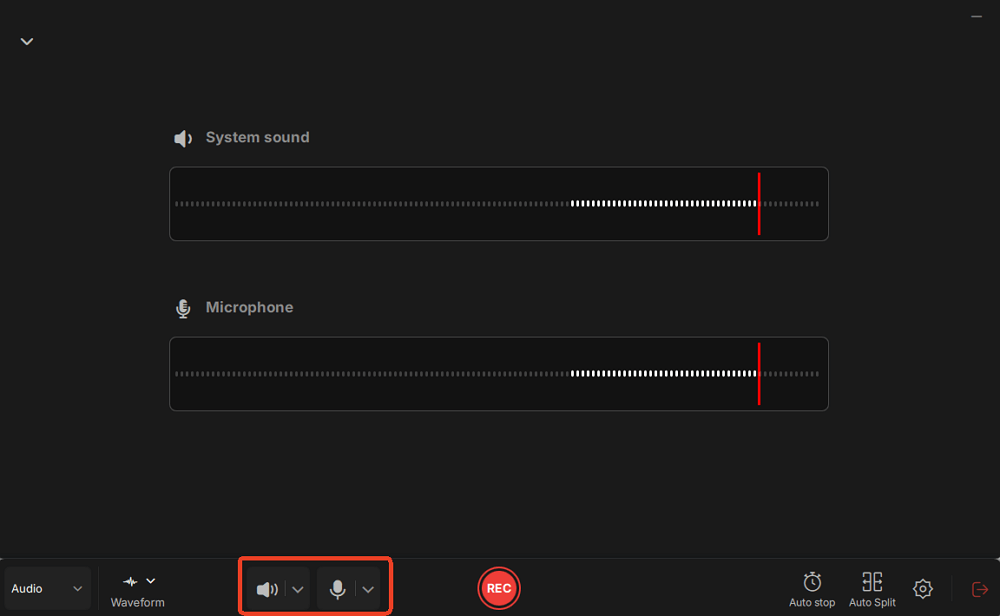
2Step 2. Make sure both audio sources are enabled before recording. Choose the speaker icon to record the other person's voice (system sound), and the microphone icon to capture your own voice. By default, both options are turned on. If you only need to record one side of the conversation, simply click the other icon to disable it.
3Step 3. Begin your audio call (Zoom, Skype, WhatsApp, Discord, Telegram, Facebook Messenger, etc.), then click the red round Record button in the center. You'll see real-time audio waveforms, confirming that audio is being captured.
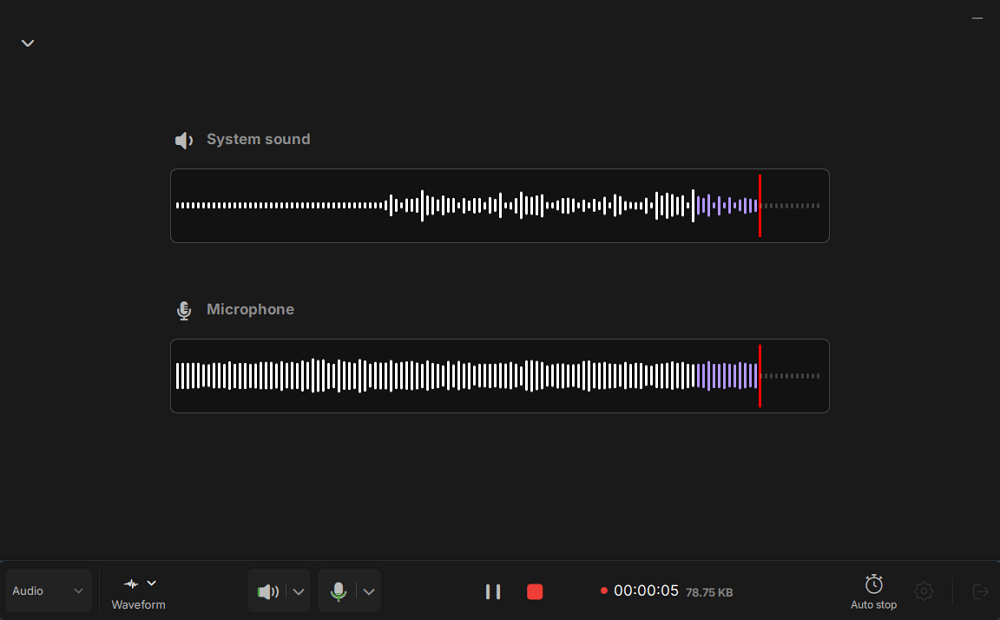
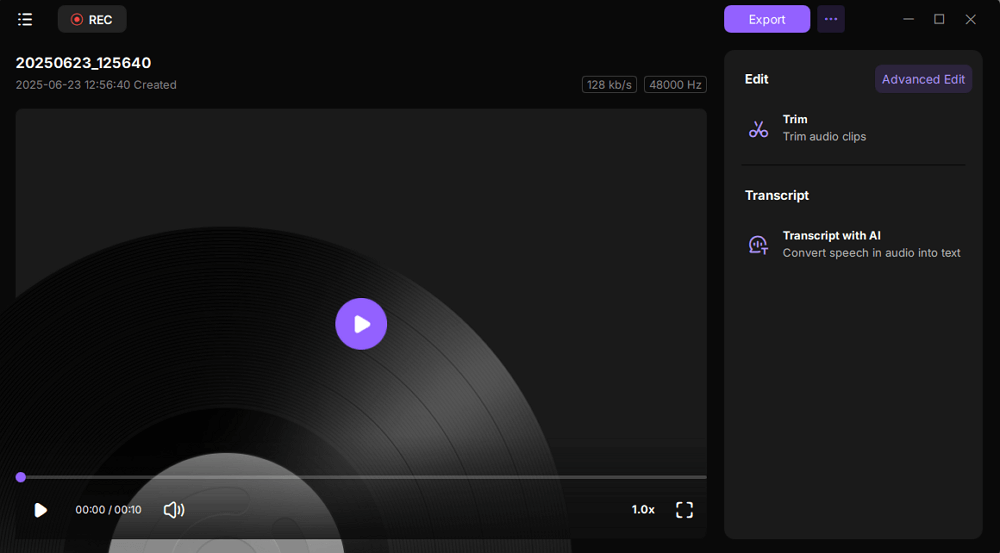
4Step 4. Click the Stop button (red square) when your call is over. The recorded file will automatically appear in the Preview window. From there, you can preview, trim, rename, or export the audio file (MP3/WAV, etc.).
Share this guide on your social media platforms to help more people.
Conclusion
Microsoft Teams does not normally allow a meeting to be secretly recorded through its built-in recording feature. Participants are notified when recording starts.
At the same time, Teams supports automatic recording, compliance recording, and an Explicit Recording Consent policy, so the exact experience can vary between organizations.
The most important distinction is between notification and consent: being notified that a meeting is recorded is not necessarily the same as being asked to actively consent to the recording.
If you are concerned about whether an employer or organization can record your meetings without consent, check the recording/privacy policy that applies to your workplace and the laws in your jurisdiction.
Can Teams Call be Recorded FAQs
1. Does Teams notify everyone when a meeting is recorded?
Yes. Microsoft states that all meeting participants receive a notification when a Teams meeting recording starts.
2. Can my employer automatically record Teams meetings?
Yes. Organizations can configure automatic recording and can use compliance recording for certain meetings or calls. Whether a particular recording policy is permitted depends on applicable laws, workplace policies, and other requirements.
3. Does Teams require everyone to consent to recording?
Not by default. Organizations can enable the Require participant agreement for recording and transcription policy. When enabled, participants must explicitly consent before their audio, video, or shared content can be included.
4. Can a Teams meeting start recording automatically?
Yes. Teams supports automatic recording when the feature is available and enabled for the meeting or organization. Automatic recording does not mean that participants receive no notification.
5. Is it illegal to record a Teams meeting without telling people?
It can be, depending on the jurisdiction and circumstances. Recording laws differ, and workplace privacy rules may also apply. Teams' recording capabilities do not determine whether a particular recording is legally permitted.
6. Can someone record a Teams meeting without Teams knowing?
A recording made with an external device or software can operate outside Teams' built-in recording system. Teams therefore cannot be treated as a universal detector of every possible recording method. If you are concerned about privacy, follow your organization's recording policy and applicable laws rather than relying solely on whether Teams displays a notification.