-
![]()
Daisy
Daisy is the Senior editor of the writing team for EaseUS. She has been working in EaseUS for over ten years, starting from a technical writer to a team leader of the content group. As a professional author for over 10 years, she writes a lot to help people overcome their tech troubles.…Read full bio -
Jane is an experienced editor for EaseUS focused on tech blog writing. Familiar with all kinds of video editing and screen recording software on the market, she specializes in composing posts about recording and editing videos. All the topics she chooses …Read full bio
-
![]()
Alin
Alin is an experienced technical blog writing editor. She knows the information about screen recording software on the market, and is also familiar with data cloning and data backup software. She is expert in writing posts about these products, aiming at providing users with effective solutions.…Read full bio -
Jean is recognized as one of the most professional writers in EaseUS. She has kept improving her writing skills over the past 10 years and helped millions of her readers solve their tech problems on PC, Mac, and iOS devices.…Read full bio
-
![]()
Jerry
Jerry is a fan of science and technology, aiming to make readers' tech life easy and enjoyable. He loves exploring new technologies and writing technical how-to tips. All the topics he chooses aim to offer users more instructive information.…Read full bio -
![]()
Rel
Rel has always maintained a strong curiosity about the computer field and is committed to the research of the most efficient and practical computer problem solutions.…Read full bio -
![]()
Gemma
Gemma is member of EaseUS team and has been committed to creating valuable content in fields about file recovery, partition management, and data backup etc. for many years. She loves to help users solve various types of computer related issues.…Read full bio
Page Table of Contents

Rel
Updated on Oct 22, 2026
0 Views |
0 min read
Want to record audio on your HP laptop? Whether you need to record your voice, capture sound playing on your computer, or record both at the same time, Windows and third-party tools offer several options. The best method depends on what you want to record and whether you need to edit the audio afterward.
✅Quick Answer: How to Record Audio on an HP Laptop
- Record your voice: Use Windows Sound Recorder for simple, free microphone recordings.
- Record system audio: Use EaseUS RecExperts to capture sound playing through your HP laptop, such as app audio or online videos.
- Record your voice and system audio together: Use EaseUS RecExperts and enable both audio sources before recording.
- Record and edit audio: Use Audacity if you need audio editing, multitrack recording, or noise reduction.
What Kind of Audio Do You Want to Record?
Before recording audio on your HP laptop, think about what you want to capture. Microphone audio records sounds picked up by your mic, while system audio captures sounds played by your computer. You can also record both at the same time.
|
Audio Type |
What It Records |
Common Scenarios |
|
Microphone audio |
Your voice, singing, instruments, and other nearby sounds |
Recording voice memos, lectures, narration, or music practice |
|
System audio |
Sounds played by your laptop, including app audio, system notifications, and online meeting audio |
Recording online classes, app sounds, or audio from videos |
|
Microphone + system audio |
Both your voice and the sound playing on your computer |
Recording tutorials with narration, online meetings where you speak, or software demonstrations |
Share this post to help more users!

How to Record Your Voice on an HP Laptop
Windows includes a built-in app called Sound Recorder that lets you record your voice without installing additional software. It's a simple option for voice memos, lecture notes, and spoken reminders.
Follow these steps to record audio using your HP laptop's microphone:
Step 1. Open Sound Recorder.
Search for Sound Recorder in the Windows Start menu and launch the app. On Windows 10 Dell computers, search for Voice Recorder instead.

Step 2. Check your microphone.
If you have an external microphone or headset, connect it first. If needed, open Settings > System > Sound > Input and select the microphone you want to use.
Step 3. Start recording.
Click the Record button and speak into your microphone. Keep the mic at a comfortable distance to avoid muffled audio or clipping.
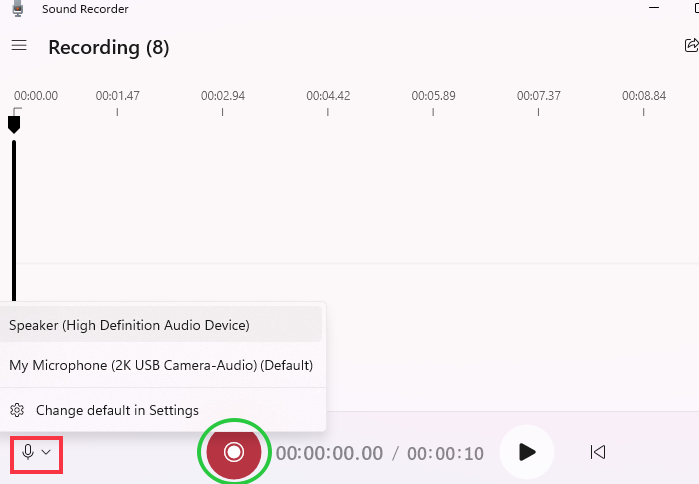
Step 4. Stop and review the recording.
Click Stop when you're finished. Select the recording in the app to play it back and check the sound quality.
Your recordings appear in Sound Recorder's recording list, where you can play them back. To locate or share a file, use the options available in your version of the app. The interface and file-saving options may vary by Windows version.
- Tips:
-
1. If your recording has no sound or the volume is too low, check that Windows is using the correct microphone and that the input volume is high enough. You may also need to allow microphone access in Windows privacy settings.
2. Sound Recorder is best for capturing sounds through a microphone. If you want to record audio playing on your HP laptop, such as app sounds or online video audio, use a tool that supports system audio recording.
How to Record System Audio on an HP Laptop
If you want to record sound playing on your HP laptop, such as audio from online classes, browser videos, apps, or meetings, you need a tool that can capture system audio. Unlike Sound Recorder, which is designed for microphone recording, EaseUS RecExperts lets you record your computer's sound directly without first configuring Stereo Mix.
RecExperts provides a straightforward way to capture system audio without manually configuring Windows recording devices. You can also choose different audio sources, adjust volume settings, and switch to microphone-plus-system-audio recording when you need to include your own voice. You can also screen record HP laptop with it with simple clicks.
Steps to record system audio on Dell laptops with EaseUS RecExperts:
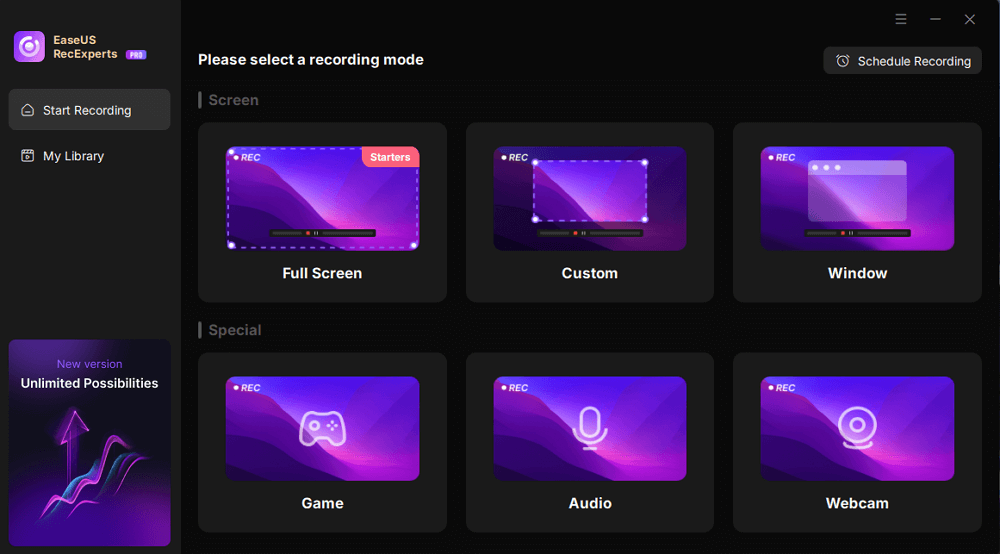
Step 1. Install and open EaseUS RecExperts on your computer, and click the Audio icon (which looks like a speaker) on the main interface.
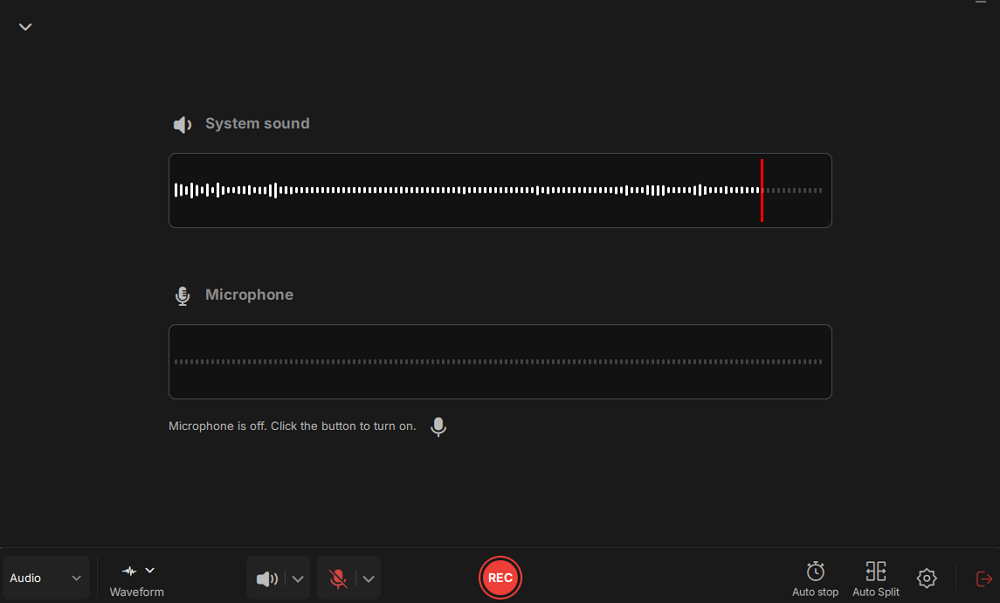
Step 2. Click the Speaker icon to turn it on to record the internal audio. You need to turn off the microphone if you don't want to capture audio from the microphone.
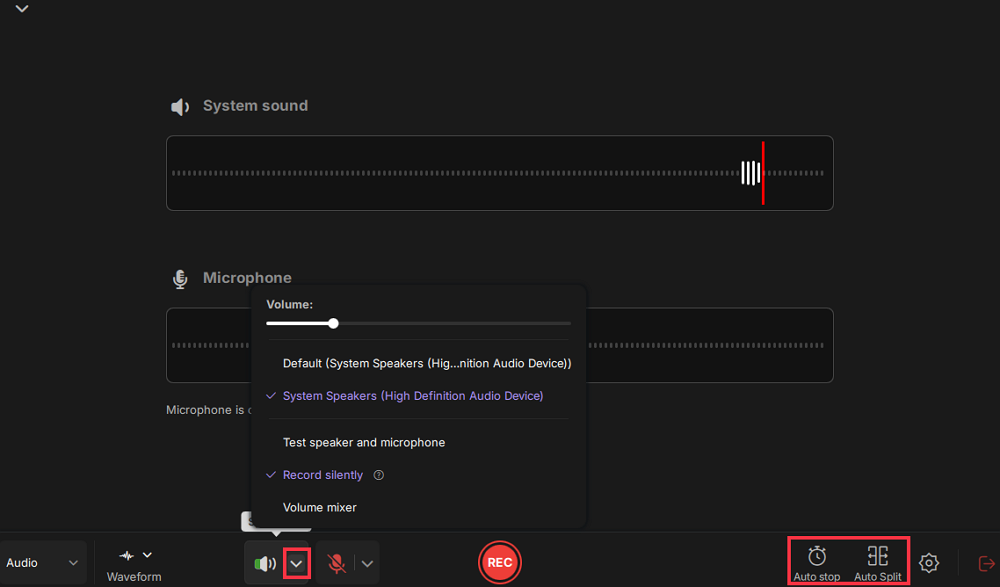
Step 3. Click the dropdown button next to Speaker to adjust the system volume and select the appropriate system speaker. You can also check the Record silently option, which allows you to record system sounds even when your computer is muted. If you need to adjust the volume further, click the Volume mixer option.
Next, click on the REC button to begin your recording.
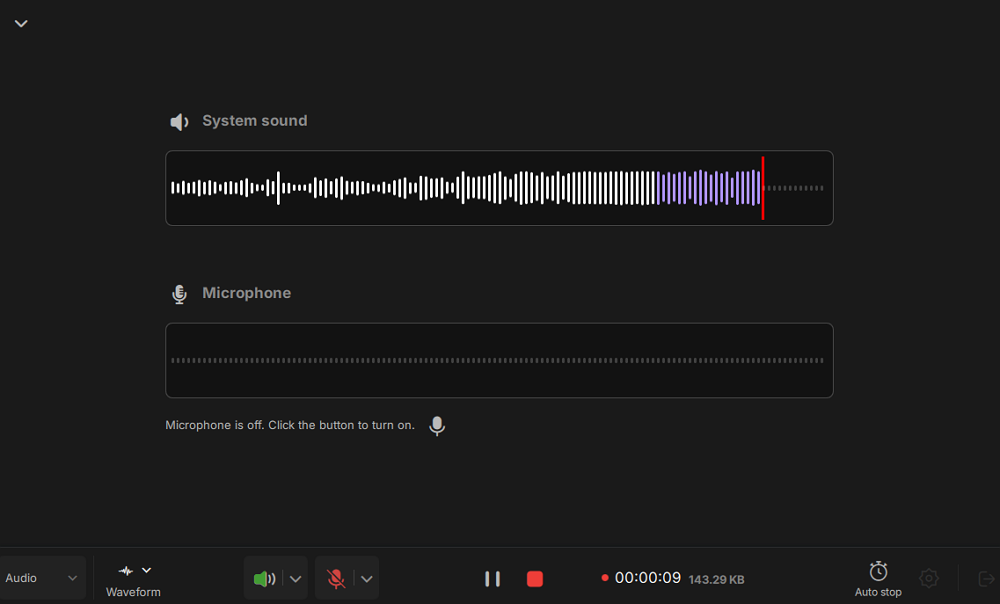
Step 4. While recording, you can pause or stop the recording by clicking on the appropriate buttons.
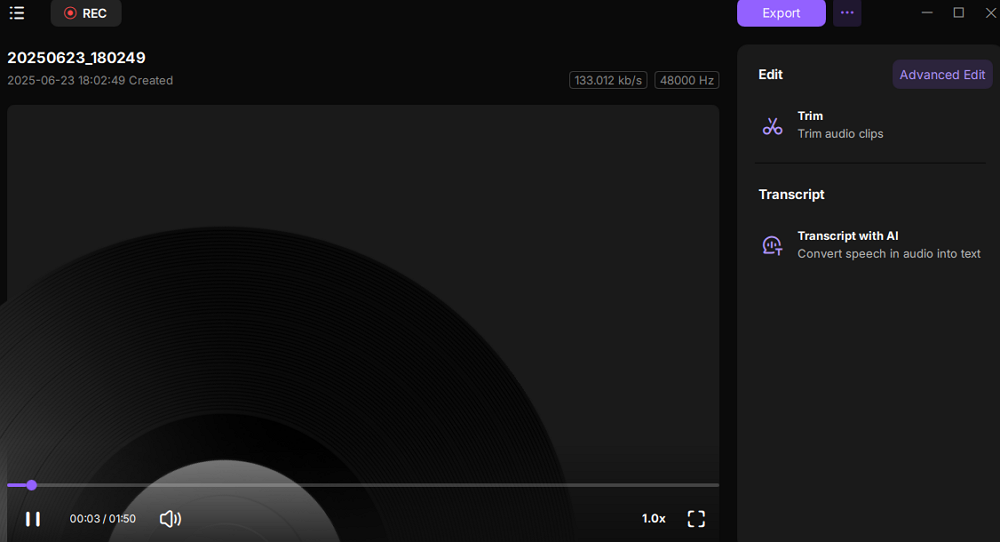
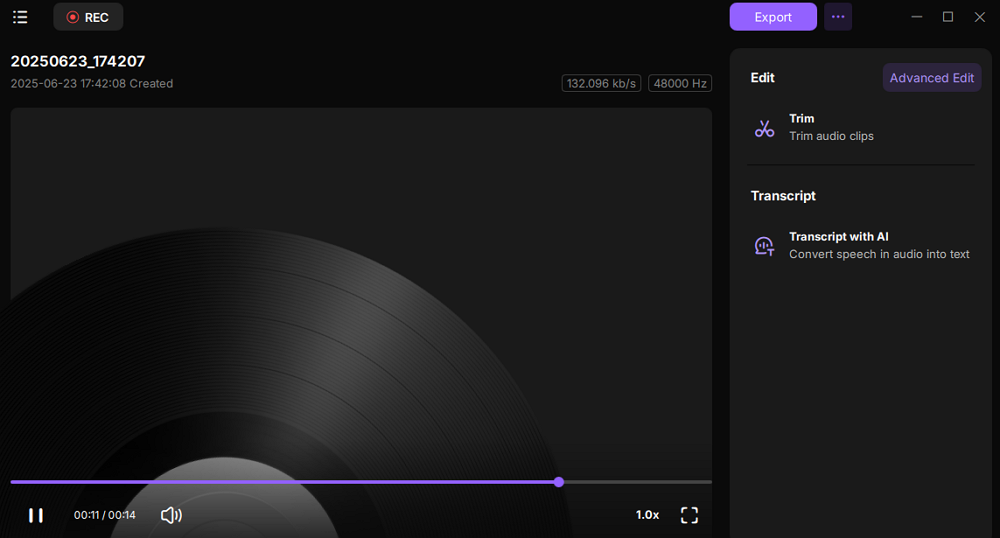
Step 6. Once you have completed the recording, you can click on the audio recording file that appears in the Recent recordings section. You can then listen to the audio using the built-in player. Additionally, you have the option to trim the audio or transcribe it into text.
How to Record Your Voice and System Audio Together on HP Laptop
If you want to record your narration along with audio playing on your HP laptop, such as when creating a tutorial or recording an online lesson, EaseUS RecExperts lets you record system audio and microphone at the same time. You can also adjust the microphone settings to make your voice clearer.
Steps to record your voice and system audio simultaneously on HP laptop:
Step 1. Launch EaseUS RecExperts and choose Audio mode (looks like a speaker) from the main interface.
Step 2. Select the sound source by clicking on the speaker sign (the system sound) or the mic sign (the microphone). Or, you can record them both at the same time.
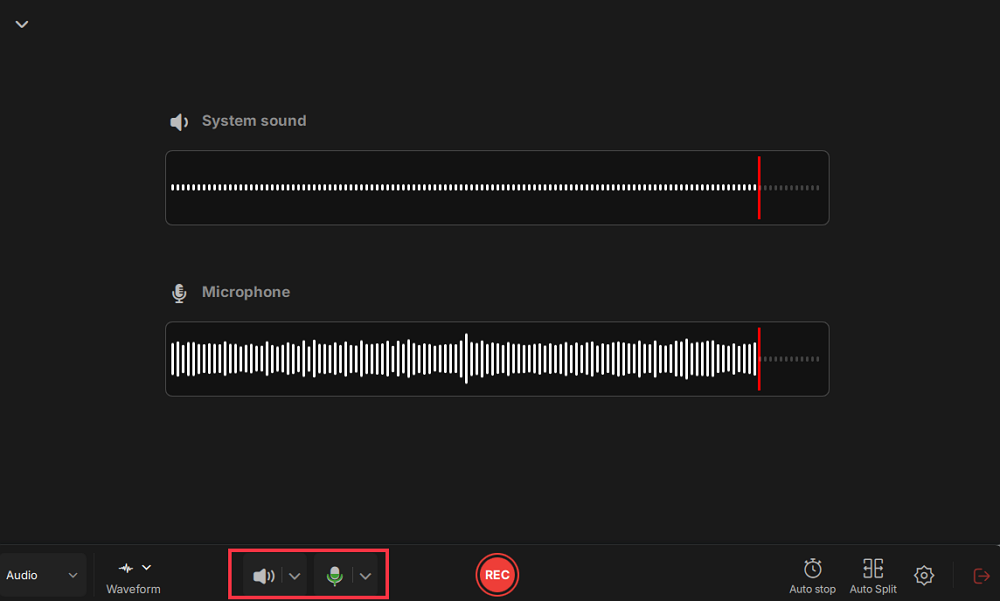
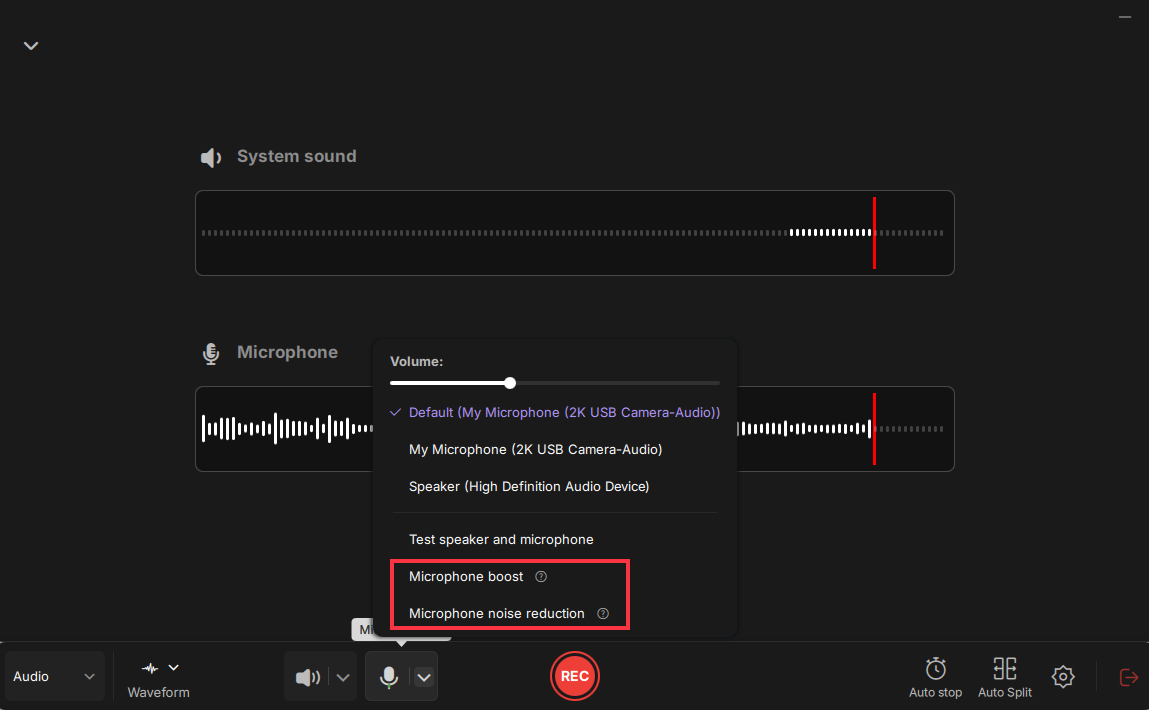
Step 3. Click the drop-down buttons next to the Speaker and Microphone to adjust the audio source settings.
- In the Speaker tab, you can adjust the volume, test the speaker and microphone, record silently, or open the volume mixer.
- In the Microphone tab, you can also enable Microphone boost and Microphone noise reduction features.
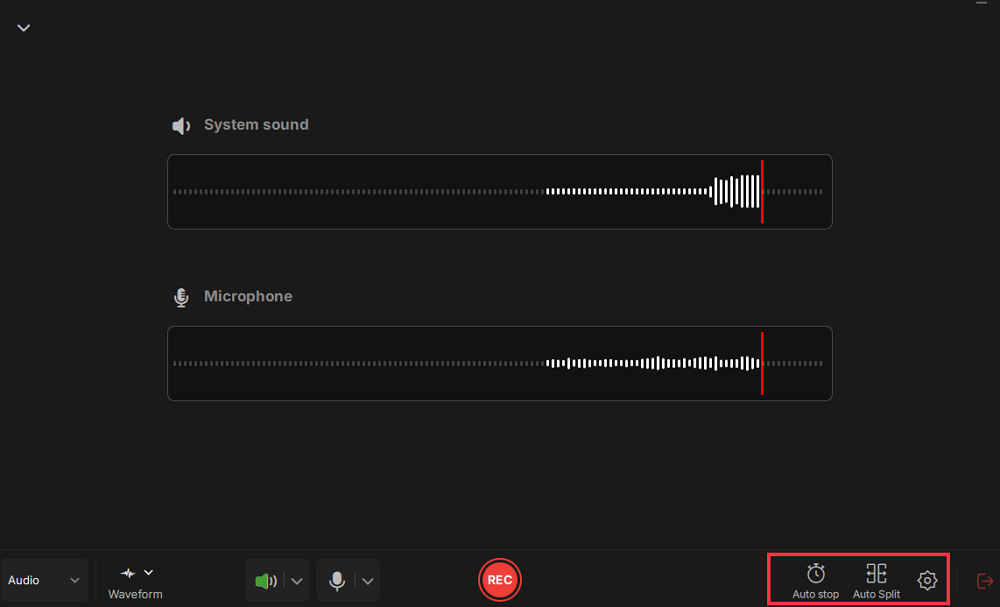
Step 4. To change the output format, bitrate, or sampling rate, you can click the Settings button in the lower right corner of the page. Of course, you can also set the automatic stop audio recording and automatic audio segmentation as needed.
Step 5. Hit the REC button to start recording audio. To finish it, just click on the red square icon to stop the recording.
Step 6. Once finished, the audio recording will be saved automatically. You can listen to or edit the recording with built-in tools.
- Tips for Better Audio Quality:
-
1. Balance the two sources. If the system audio is much louder than your voice, lower the playback volume or adjust the source levels before recording.
2. Use a suitable microphone. An external USB microphone or headset may provide clearer voice recordings than a built-in laptop microphone, especially in a noisy room.
3. Choose the right output format. If you need an audio-only file, check the available output formats in the settings and choose one that suits your editing or sharing needs.
4. Make a short test recording first. This helps you catch muted inputs, low microphone volume, or unwanted background noise before recording a long session.
How to Record and Edit Audio on an HP Laptop
If you need more than a basic recording, Audacity is a more editing-focused option for recording voice, music, or other audio input and editing it afterward. It lets you cut mistakes, remove unwanted noise, adjust volume, and export the finished audio in different formats.
Audacity is especially useful when you need to polish a recording before sharing or publishing it. For example, you can remove pauses from a voice-over, clean up a lecture recording, or adjust the volume of a spoken tutorial.
Steps to record audio on HP laptop with Audacity:
Step 1. Install and open Audacity.
Download Audacity from its official website and launch it on your HP laptop.
Step 2. Select the audio source you want to record.
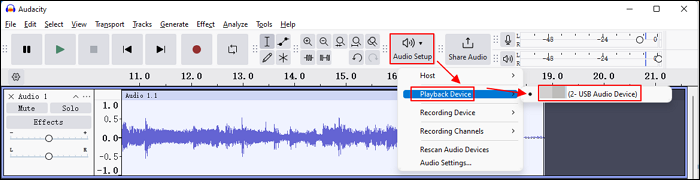
Click Audio Setup in the top toolbar. Choose the audio host, recording device, and playback device from the available menus. The settings depend on whether you want to record your voice or capture sound playing on your computer.
- Go to Audio Setup > Host and select Windows WASAPI first.

- To record your voice: Open Audio Setup > Recording Device and select your built-in microphone, USB microphone, or headset microphone. The device name varies depending on your HP laptop and connected equipment.
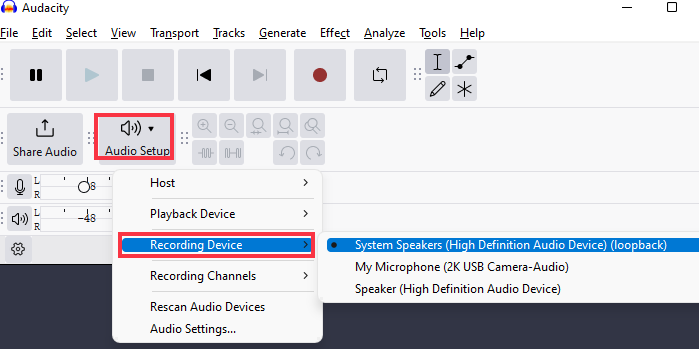
- To record internal audio: Open Audio Setup > Host and select Windows WASAPI. Then open Recording Device and choose the playback device you use for listening, with (loopback) at the end of its name—for example, Speakers (loopback). This lets Audacity capture audio playing through that output device without requiring a Stereo Mix input.
Step 3. Start recording.
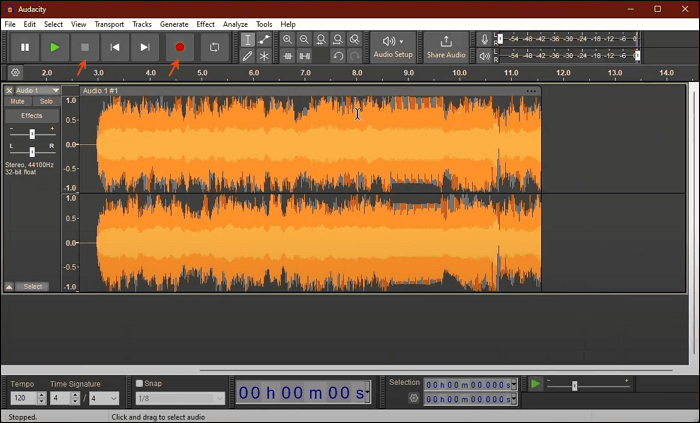
Once you've selected the correct source, click the Record button and speak into your microphone or play the audio you want to capture. Click Stop when you're finished, then play the recording back to check the result.
Step 4. Remove mistakes and unwanted sections.
Select the part of the waveform you want to remove and press Delete. Remove long pauses, mistakes, or irrelevant sections, then play the edited audio to make sure the cuts sound natural.

Step 5. Reduce background noise and adjust volume.
If your voice recording contains steady background noise, such as a fan or low-level hiss, select a section containing only that noise and use Noise Reduction to create a noise profile. Then select the audio you want to clean and apply the effect. You can also use Normalize to bring the audio to a more consistent level. Preview the result to make sure your voice still sounds natural.
Step 6. Export the finished audio.
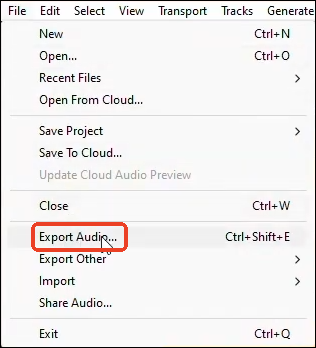
Choose File > Export Audio, select a format such as MP3 or WAV, and save the file to your preferred location. If you want to continue editing later, also save an Audacity project.
Common HP Audio Recording Problems and Fixes
1. HP Laptop Records No Sound
If your recording is silent, you may have selected the wrong input device or microphone access may be disabled.
- Go to Settings > System > Sound > Input and select the correct microphone.
- Check the input volume and make sure the microphone isn't muted.
- In Settings > Privacy & security > Microphone, allow microphone access for desktop apps.
- Test the microphone in Windows to see whether the device or the recording software is the issue.

2. Cannot Record System Audio
If your microphone works but your recording doesn't capture audio playing on your HP laptop, you may be using the wrong recording source.
- In Audacity, open Audio Setup > Host and select Windows WASAPI.
- Under Recording Device, select your playback device with (loopback) in its name.
- Play the target audio and check the recording meter before recording.
If the loopback device is unavailable, check your audio devices and drivers. See Audacity's official guide to recording computer playback.
3. Microphone Volume Is Too Low
If your voice sounds too quiet, check the microphone input level in Settings > System > Sound > Input. Make sure the mic isn't muted, move closer, and enable Microphone Boost if available. In Audacity, you can also use Normalize to increase the recording volume.
4. Recording Has Background Noise or Static
Background noise may come from your surroundings, microphone connection, or excessive input gain.
- Reconnect the microphone or try another USB port.
- Reduce microphone boost and move away from noisy equipment.
- In Audacity, use Noise Reduction to reduce steady sounds such as fan noise or hiss.
Conclusion
You can record audio on an HP laptop using Windows Sound Recorder, EaseUS RecExperts, or Audacity.
Sound Recorder is best for quick voice recordings, EaseUS RecExperts is a convenient option for capturing system audio or recording your microphone and system sound together, and Audacity is ideal for recording and editing audio, reducing background noise, and adjusting volume.
Choose the tool that matches your audio source and editing needs, and make a short test recording before starting a long session.
FAQs About Recording Audio on HP Laptop
1. How do I record my voice and internal audio at the same time on an HP laptop?
Use EaseUS RecExperts to record both sources in one session. Open its Audio mode, enable both System Sound and Microphone, select the correct microphone, and test the audio levels before clicking REC. Audacity may require additional configuration to capture separate microphone and system-audio sources simultaneously.
2. Can I record internal audio on an HP laptop without a microphone?
Yes. You can record internal audio without using a microphone. In EaseUS RecExperts, select Audio mode and enable System Sound while turning off the microphone. In Audacity, select Windows WASAPI as the audio host and choose the appropriate playback device with (loopback) in its name.
3. Does HP have a built-in audio recorder?
HP laptops running Windows include Microsoft's Sound Recorder app, although the app name may vary by Windows version. You can use it to record your voice through a microphone without installing additional software. However, it is not designed for directly capturing internal system audio.
4. Why is my HP laptop not recording audio?
Common causes include selecting the wrong recording device, a muted microphone, disabled microphone permissions, or an unavailable system-audio capture source. Check Settings > System > Sound, confirm microphone permissions under Windows privacy settings, and verify that your recording software is using the correct audio source.
5. How can I improve audio recording quality on my HP laptop?
Use a suitable microphone, adjust the input volume, and reduce background noise in your recording environment. If you use Audacity, apply Noise Reduction to steady background noise and Normalize to adjust the audio level. Make a short test recording to check the sound before recording a full session.